
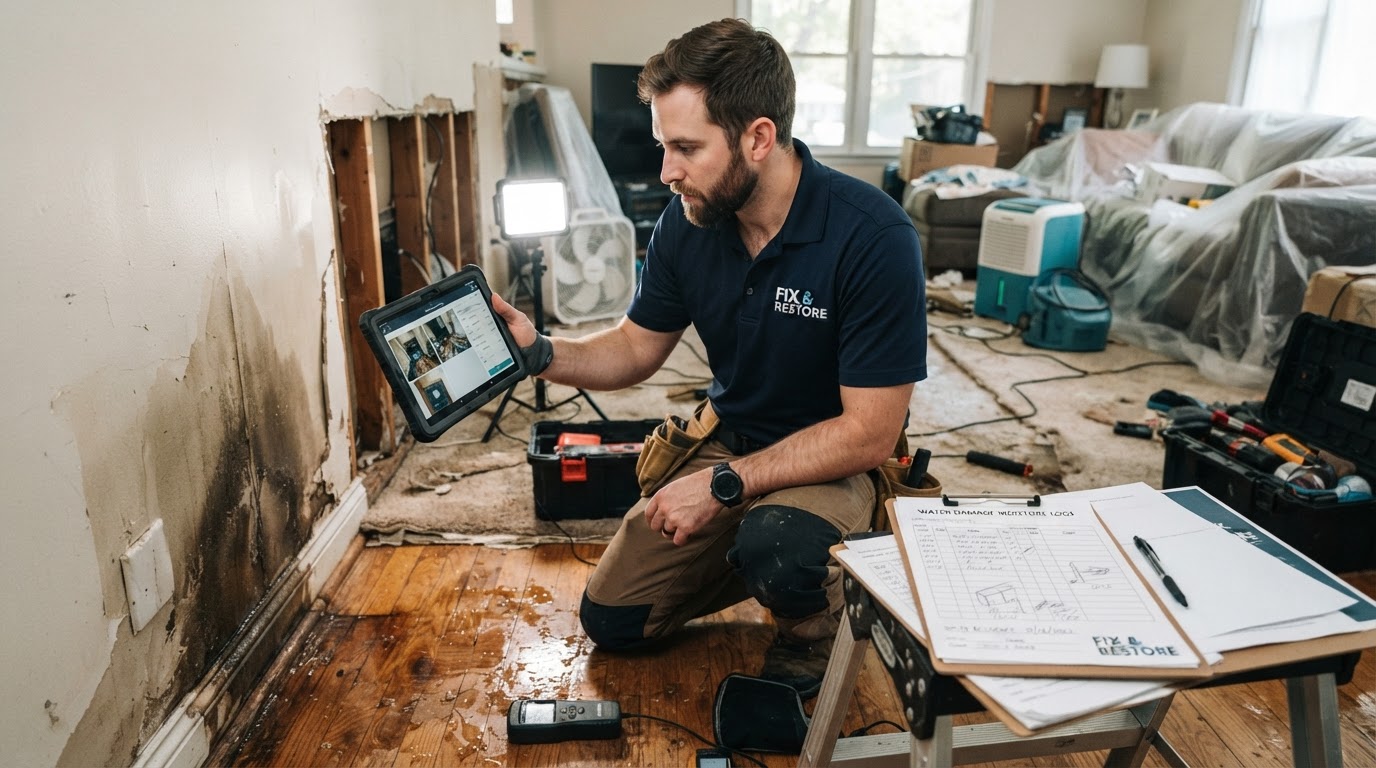
Insurance adjusters don't see what you see. They rely entirely on the documentation you provide. A claim with clear, complete records settles faster and for more money than one with gaps.
The difference between a fast settlement and a denial often comes down to documentation — not the damage itself.
What to Photograph
Photograph everything before anything is moved or cleaned. Wide shots establish the scene; close-ups capture the detail.
- Wide room shots showing the source and extent of damage.
- Close-ups of water lines, stains, and affected materials.
- Damaged personal property, including serial numbers where visible.
- The source of the loss (burst pipe, roof leak, appliance failure).
- Moisture meter readings on walls and floors.
The Moisture Log
A moisture log is the single most powerful document in a water claim. It's a dated record of moisture readings taken across the affected area over the course of drying.
It proves the damage was real, shows the scope of migration, and demonstrates that drying was completed properly. Without it, an adjuster can argue the damage wasn't as extensive as claimed.
"A claim with clear, complete records settles faster and for more money than one with gaps."
What to Keep
Keep every receipt, every email, and every photo. Organize them by date. Fix & Restore provides a complete documentation package for every job — moisture logs, photo logs, drying charts, and a detailed scope of work — formatted the way adjusters expect to receive it.